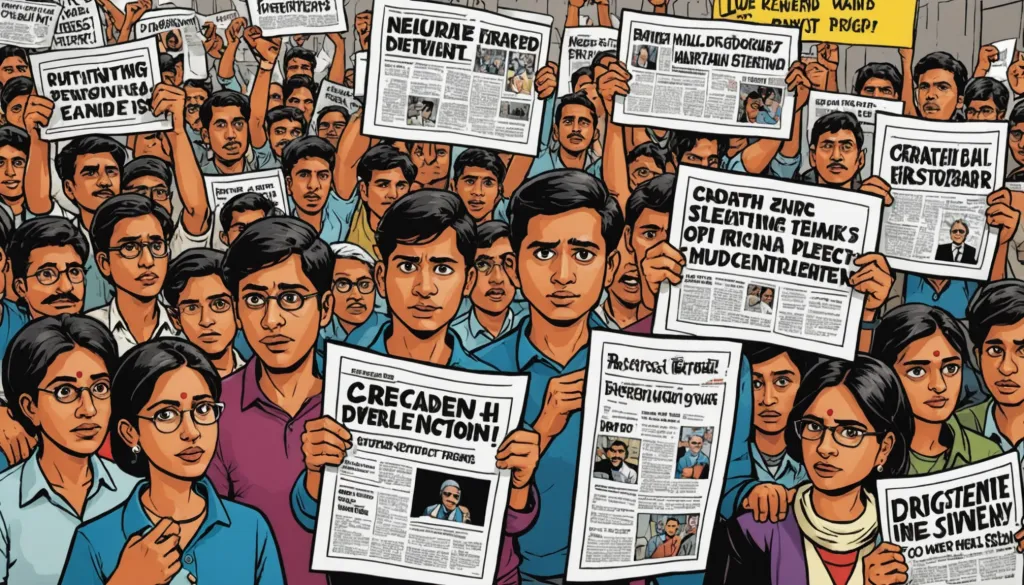
Photos and videos documenting student protests in Delhi were flagged, buried, or blocked on Instagram this week, according to users, creators, and digital rights advocates who say Meta has offered no explanation for the pattern. The complaints emerged as clashes at the protest site intensified, with police deploying tear gas and lathicharges against demonstrators demanding accountability over alleged irregularities in the NEET-UG examination.
A pattern users can see but cannot verify
Multiple accounts, including those belonging to the Cockroach Janta Party and politician Anish Gawande, found their posts labelled "sensitive content" despite containing footage lifted directly from television broadcasts. Users told ET that their discovery feeds had stopped surfacing protest-related material even though they had been actively engaging with such content for weeks. Clicking "know more" on flagged posts, several said, did not reveal what standard had been violated. buy vpn
Apar Gupta, founder of the Internet Freedom Foundation, called this a hollow form of transparency. A restriction is visibly applied, he noted, but the underlying policy justification remains undisclosed. IFF has formally asked Meta whether these actions stem from government legal requests, a question the company had not answered by the time of publication.
How platform moderation actually works
Instagram has stated publicly that no single algorithm governs what users see. Instead, a layered system of classifiers and automated processes decides visibility, ranking, and content warnings. This architecture makes it difficult to distinguish between a deliberate takedown ordered by authorities, an automated misclassification, and a routine sensitivity filter applied inconsistently.
That ambiguity was on display when the CJP's main account, followed by 25 million people, was temporarily blocked with a message citing compliance with "a legal request." Hours earlier, a separate account belonging to CJP spokesperson Saurav Das had been suspended and then restored after Meta acknowledged its automated systems had erred. The coexistence of a legally justified block and an admitted algorithmic mistake, within the same news cycle, illustrates how opaque enforcement can blur the line between government-directed censorship and technical failure.
The legal stakes
Legal experts note that platforms do retain some discretion to moderate content during unrest, but unexplained restrictions sit uneasily with Article 19(1)(a) of the Constitution, which protects freedom of speech and expression. When a private company enforces a state directive without disclosing it, or applies a vague "sensitive content" label without citing which rule was breached, users are left unable to challenge the decision or even understand its basis.
An industry expert pointed to a broader, well-documented tension: platforms have previously restricted content related to human rights abuses even when that material was corroborated by international bodies such as the UN. That history lends weight to concerns that protest footage, however factual, can be treated as a moderation liability rather than a matter of public record.
What accountability would look like
IFF's demand is narrow but significant: Meta should disclose whether restrictions originate from government orders or internal policy, and specify which content standard was invoked. Without that clarity, users cannot distinguish lawful compliance from overcautious automation, and cannot seek redress through appeal or judicial review. As protest coverage continues to move primarily through social platforms rather than television or print, the mechanics of who decides what is seen, and on what authority, have become as consequential as the protests themselves.