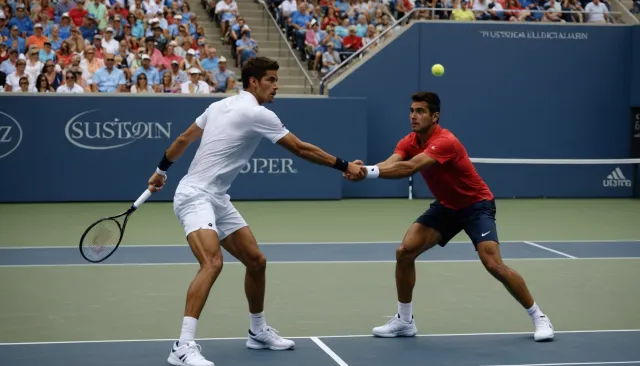

The US Open's mixed doubles competition opens this week at the USTA Billie Jean King National Tennis Center, bringing an unusual pairing to center stage: Serena Williams alongside Carlos Alcaraz. The event also features top-seeded Aryna Sabalenka and Novak Djokovic, while qualifying rounds for the men's and women's singles competitions continue in parallel. For fans without cable, the question of how to watch has become almost as pressing as who wins.
Streaming access to the US Open runs exclusively through ESPN and its affiliated platforms, which means viewers outside a cable subscription need to find a compatible service or rely on geographic workarounds. Live TV bundles such as DirecTV, Fubo, Sling, and YouTube TV all carry ESPN under varying sports packages, with prices ranging from roughly $20 to $65 a month depending on the tier. For those who travel or live outside the coverage area entirely, a virtual private network can restore access by routing a connection through a server in an eligible region - and choosing a reliable, well-optimized option, such as the best vpn server for speed, matters considerably when streaming live sports coverage that cannot tolerate buffering or lag.
How a VPN Actually Restores Access
A VPN works by encrypting a device's internet traffic and rerouting it through a server located elsewhere, which makes the connection appear to originate from that server's location rather than the user's actual one. This is why a viewer in one country can, for instance, connect to a server in Australia and access a regional broadcaster like 9Now to stream live coverage. The underlying mechanism relies on tunneling protocols that wrap data packets in an encrypted layer, shielding browsing activity from internet service providers and third parties while also bypassing content restrictions tied to geography. The trade-off is that server congestion, distance, and encryption overhead can all affect streaming quality, which is why server selection is not a trivial detail for anyone trying to watch live sports without interruption.
What Else Is Happening This Week
Beyond the mixed doubles opener, qualifying rounds for the singles draws run from August 24 through August 27, setting the stage for the main singles competition beginning August 30. The tournament, first held in 1881, remains the second-oldest of the four Grand Slam events, trailing only Wimbledon, and shares a hard-court surface with the Australian Open. This year's field includes 17 former Grand Slam singles champions, among them Jannik Sinner, Alexander Zverev, Alcaraz, and Djokovic on the men's side, and Sabalenka, Elena Rybakina, and Jessica Pegula leading the women's rankings. The United States fields the largest national contingent, with 28 players in the main draw, including Coco Gauff, Amanda Anisimova, Ben Shelton, and Taylor Fritz.
A Broader Access Question
The reliance on a single broadcaster for a globally watched event highlights a familiar tension in digital media: exclusive licensing deals can improve production quality and revenue for rights holders, but they also narrow legitimate access for international or cord-cutting audiences. VPN use for this purpose sits in a legal gray area in most jurisdictions - it is not illegal to use one, but it may violate a streaming service's terms of service. Viewers should weigh that distinction before relying on location spoofing, and should also confirm that any VPN provider they choose maintains a clear no-logging policy and uses current encryption standards, since not all services offer the same level of privacy protection despite similar marketing claims.